

Using structured data for AI search is undeniably a best practice, but it’s not a cure-all or even a true ‘ranking factor.’
Since AEO (answer engine optimization) is still so new, it’s inevitable that misconceptions will emerge, and structured data is a prime example.
Read a few guides online, and you may get the impression that structured data formats like semantic HTML and schema markup are magic keys that guarantee AI citations, which isn’t true.
The reality is more nuanced.
On its own, structured data does nothing to convince AI search systems of your credibility.
For that, you still need high-quality content, editorial backlinks, and trusted third-party mentions.
All structured data does is help LLMs (large language models) parse, interpret, and understand your content. It brings clarity, consistency, and context, which is exactly what some brands are missing.
Think about it like this: adding structured data won’t do anything to improve the AI visibility for a brand with low-quality, untrustworthy content.
What it can do is help credible brands get cited more consistently by adding clarity and context to ambiguous or cluttered content structures.
Structured data is a means to an end, not the final destination.
In this guide, we’ll teach you the real value of structured data for AI search and how to leverage it effectively without succumbing to false expectations.
Structured Data for AI Search Isn’t a Magic Key: Dispelling Myths

First, let’s clear up the main misconceptions floating around about structured data.
In particular, there are two prevalent myths about it:
-
Myth #1: Adding structured data guarantees AI citations.
You’ll see this myth peddled across countless AI search guides online. Most of the time, the claim is, “Add JSON-LD schema markup, and you’ll start earning AI citations!” The flawed thinking here is that adding structured data somehow builds trust and credibility. In reality, structured data builds clarity, not authority.
-
Myth #2: Structured data is a ranking factor.
It’s also common to see structured data listed as a direct ranking factor for organic search and AI search systems. Once again, this is not true. In terms of organic search, Google confirmed years ago that structured data helps content qualify for rich results, but that it doesn’t impact core rankings. It’s more important to include for AI search, since it aids with parsing and clarity, but structured data still does not establish authority or vouch for content quality.
What structured data actually does is make your content legible to machines.
Why structured data is necessary but not a ranking factor

Without structured data, LLMs are forced to infer meaning and entity relationships from messy HTML. This can cause misinterpretations and missed context.
With structured data in place like semantic HTML and schema markup, LLMs can understand and parse your content cleanly.
For example, the FAQPage schema type lets LLMs know beyond a shadow of a doubt that the piece of content (or section) contains frequently asked questions.
If no structured data is present, the LLM has to guess about the nature of the content, and it may not catch the fact that it’s an FAQ page.
Think about it this way: structured data is like subtitles on a foreign film. Without them, you’re forced to guess what’s happening based on nonverbal gestures and random visuals. With them, the plot suddenly makes perfect sense.
At the same time, the presence of subtitles doesn’t automatically make a foreign film a good movie. They just help you understand what’s actually happening in the film. Structured data in AI search works the same way.
The Benefits Structured Data Actually Provides for AI Search
While structured data doesn’t guarantee citations or establish credibility, it is a necessity for consistent AI visibility.
Why is that?
Going back to the film analogy, imagine an award-winning foreign film that doesn’t have subtitles in your language. As a result, you aren’t able to completely understand it.
Adding subtitles would enable you to fully appreciate the film’s existing brilliance. Once again, the subtitles didn’t add quality; they added context.
Clarity enables the appreciation of existing quality.
This type of clarity is what structured data provides, just for machines.
Knowing this, imagine high-quality brand content that doesn’t contain structured data. Since the content isn’t machine-readable, LLMs aren’t able to ‘fully appreciate its brilliance.’
This is why adding structured data to content that’s already high-quality can improve visibility.
It’s also why implementing structured data is a best practice for every new piece you publish. It takes hard work and resources to produce content, so why not make it machine-readable to ensure modern search systems can properly understand it?
Bearing that in mind, here’s a closer look at the real benefits structured data provides in terms of AI search visibility.
Faster and more accurate parsing

One of the biggest benefits of structured data is its ability to reduce parsing and inference errors.
Schema markup clearly identifies entity relationships for LLMs so that little-to-no ‘guessing’ is required.
For instance, let’s say an LLM comes across your CEO’s name in unstructured HTML.
The LLM must infer via context clues (if there are any) whether you mean a person, place, or even a product name.
However, if you properly use the Person schema type, complete with jobTitle, worksFor, and nested Organization, the LLM will know for sure that you’re talking about the CEO of your company.
According to research from Data World, schema markup enables LLMs grounded in knowledge graphs to achieve 300% higher comprehension vs. unstructured data.
Parsing unstructured data is also slow and computationally expensive.
Structured data greatly cuts down on the inference-heavy pattern matching and context analysis involved with parsing unstructured HTML. Since there’s no guesswork involved and schema outlines entity relationships, 2 – 5x fewer tokens are processed per entity, leading to much faster parsing.
Rich content extraction for generative AI answers
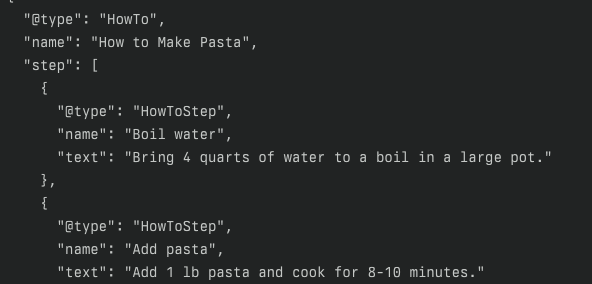
Schema types predefine extractable ‘chunks’ that LLMs can pull directly into AI answers.
This is the biggest reason why structured data like schema markup is so crucial for AI search (and even organic search, for that matter).
On the organic search side, schema markup qualifies you for special SERP features like Featured Snippets and embedded reviews.
Schemas like HowTo, Recipe, Article, Product, and QAPage provide prepackaged, copy-and-paste-ready answers that AI systems can easily pull into their synthesized answers.
That’s why schema-heavy pages dominate AI Overviews and AI-generated summaries. Research shows that pages with schema markup are 3x more likely to earn AI citations.
Remember, the quality isn’t coming from the schema; it’s the clarity, but clarity is still massively important.
Without schemas, LLMs must undergo messy summarization, such as inferring that a piece of text is a recipe and then trying to identify each step without explicit structure.
Thus, if your top-tier content doesn’t contain appropriate schema types, it’s highly likely that it’ll get overshadowed in favor of high-quality content that does contain structured data.
Entity consistency across pages
Using structured data across your website also helps to create a ‘knowledge graph lite’ version of your brand.
In particular, the Breadcrumblist and sameAs schema types help create a cohesive image of your brand’s identity across multiple pages. This reinforces existing knowledge about your brand found in mainstream databases like Wikipedia with data straight from the source.
Entity relationships play a major role in how LLMs disambiguate similar concepts, understand meaning, and infer context, so you have every reason to optimize your brand’s entity profile.
Technical SEO: Enabling Clean Machine-Level Interpretation
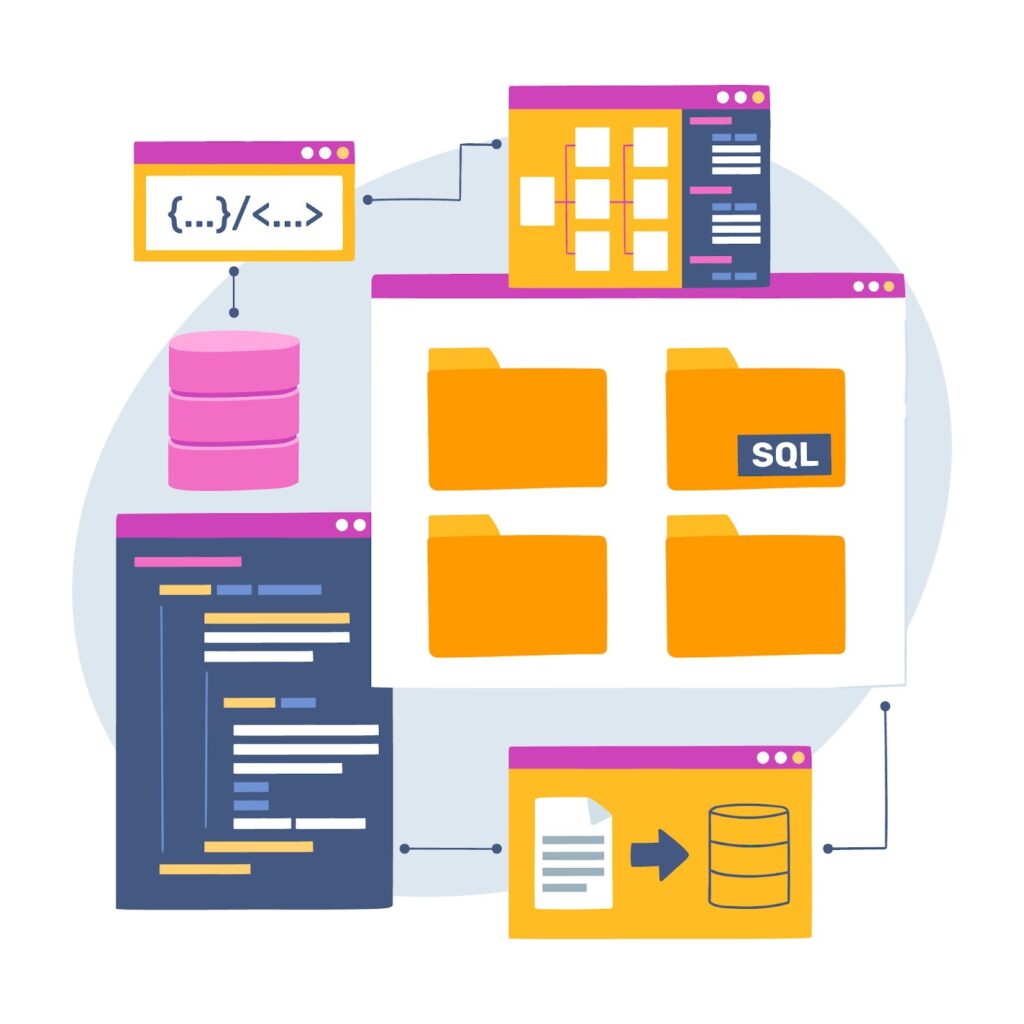
Implementing structured data on individual pages is powerful, but proper technical SEO makes your entire site machine-readable at scale.
Technical SEO is the infrastructure layer that holds the entire mini knowledge graph of your site together.
It achieves this through:
-
The implementation of sitewide semantic HTML (baseline structure) and schema markup
-
Clean URL structures and internal links provide explicit entity pathways so that the connections between entities and concepts are crystal clear
-
Robots.txt and canonical tags ensure LLMs see your intended content with no duplication
-
Improved site performance (Core Web Vitals) for peak visibility and user experience
-
Proper crawlability and indexability so algorithms and AI systems can track you consistently across thousands of pages
Whether you’re targeting organic search or AI search platforms like ChatGPT, technical SEO provides the stable foundation you need to get the most out of your greater search strategy.
Without technical SEO, even perfect schema markup can get lost in technical noise like duplicate content, mobile formatting nightmares, orphan pages, and sites with poor loading speed.
With airtight technical SEO, your site becomes a clean, interconnected entity system that LLMs can navigate effortlessly. All major entity relationships will be immediately apparent, and each piece of content will contain pre-formatted snippets that AIs can pull directly into generated answers.
| Want your site to have a rock-solid infrastructure for AI search? Sign up for our Technical SEO services! |
Final Thoughts: Structured Data for AI Search
Structured data may not inherently improve your content’s quality, but it does play a significant role in helping your content get seen and understood by AI search systems.
For this reason, structured data isn’t something brands can live without anymore.
It’s not a magic key to guaranteed citations, but it does ‘add machine subtitles’ to your strongest pieces of content.
Do you want to start earning more AI citations to generate high-quality traffic?
Check out AI Discover, our service specifically catered to improving AI search visibility!
Leave a comment