

User reviews on platforms like Google and Yelp have evolved from static reputation markers to multi-faceted trust signals.
Here’s how.
Before LLMs (large language models) took over the search landscape, classic search algorithms treated reviews as numerical proxies for brand quality.
In other words, the numbers mattered, not the actual meaning behind the reviews.
For instance, if a plumbing service had a 4.5-star average rating with over 100 reviews, it would automatically boost its local pack rankings.
It didn’t matter if all 100 reviews were brief, one-sentence variations of ‘they’re great.’ As long as the numbers were there, the rankings followed suit.
Reviews in AI search work differently.
LLMs are able to understand the contextual meaning behind a review, including its emotional sentiment and level of depth.
Not only that, but LLMs also use reviews as layered trust signals, so they play a part in your ability to earn AI citations.
This guide unpacks all the ways reviews influence AI recommendations, including the best ways to optimize your review profile.
How Traditional Algorithms Processed Reviews
In the past, classic search engines like Google treated reviews as simple math problems.
Volume and recency were the ruling factors behind review success.
If a brand could pump consistent 5-star reviews into their profiles, it was a certainty that they’d eventually achieve local pack prominence:
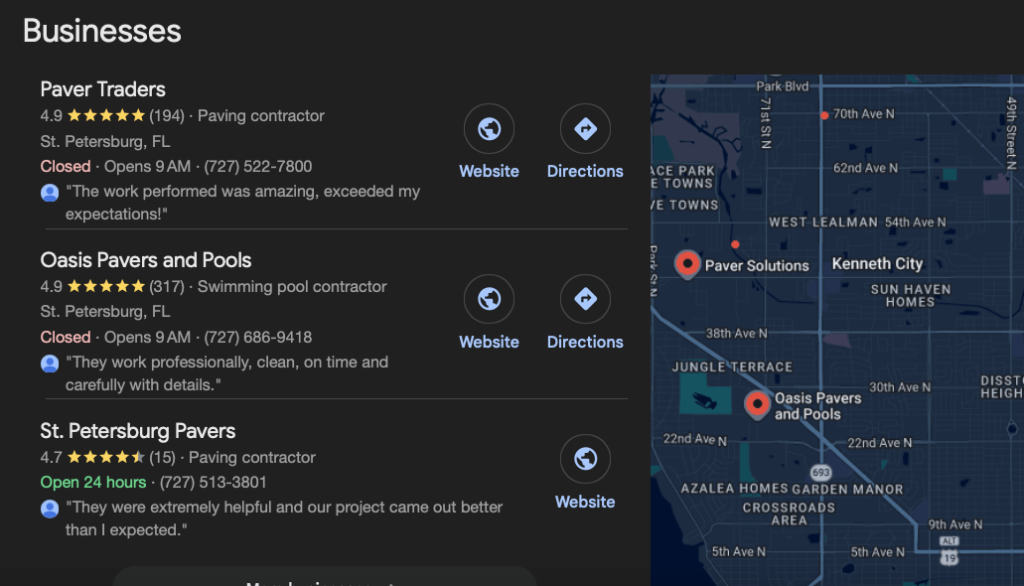
Search algorithms would scan a website’s schema markup to pull review dates and star ratings. They could also pull aggregate ratings from Google Business Profiles or Yelp APIs.
In doing so, the text was ignored entirely.
There was no sentiment analysis or detailed parsing of the review text. It was entirely a numbers game, so it didn’t really matter if the majority of a website’s reviews contained little to no substance.
A brief, repetitive review like ‘great service’ was equally as impactful as an in-depth breakdown of a restaurant’s menu, as long as the star ratings were the same.
As you can imagine, this system was very easy to manipulate.
Since quantity and frequency mattered more than quality, it was easy for anyone to start pumping their review profile with fake reviews. The more boring 5-star blurbs you could churn out, the better.
This system may have been easy to implement, but it missed a lot of nuance and was easy to exploit.
How LLMs Changed the Review Game: NLP and Sentiment Analysis

LLMs elevate reviews from numeric staticness to rich, interpretable data sources by evaluating the language for intent and emotion.
This shift powers more accurate AI recommendations, and it makes review profiles more difficult to manipulate.
Instead of skimming stars, LLMs use a combination of NLP (natural language processing) and sentiment analysis to understand reviews on a much deeper level than before:
-
NLP
This is the primary technology that enables computers to understand written language in all its complexity (slang, nuance, negation, etc.). It enables machines to process what sentences actually mean instead of treating them as isolated keywords.
-
Sentiment analysis
Thanks to sentiment analysis, LLMs can infer the emotional undertones behind a user’s review, such as if they were unhappy (or even sarcastic and snarky) about a missing service or feature.
These two elements make it possible for AI systems to understand the why behind a review instead of treating it as just a number.
Which factors do LLMs analyze when parsing user reviews?
Here are the core factors LLMs analyze in user reviews:
-
Sentiment polarity
It’s determined whether the sentiment behind the review is mostly positive or negative based on the semantic clues provided in the text (and the star rating).
-
Emotional undertones
Sometimes, a mainly positive review can have negative undertones in the accompanying text. An example would be a 4.5-star review that goes on to mention ‘uncomfortable seating’ and ‘waiting too long to get the check.’ When parsing this review, LLMs would flag it as mixed sentiment and make note of the operational pain points. Traditional algorithms would simply count it as a positive review based on the star rating alone.
-
Review depth (shallow vs. detailed)
LLMs also pay attention to the scale of the review. Shallow, one-liner reviews get weighted far lower than in-depth assessments. Also, shared phrasing, like 12 five-star reviews that all say ‘great’, can signal spam and manipulation. Therefore, a brand with 50 detailed reviews from experienced profiles will carry more weight than a brand with 6,000 brief reviews that share similar phrasing.
-
Specificity and topics
An LLM will extract specific entities out of reviews, such as product features (oat milk latte) or experiences (my morning ritual). This helps prioritize thematic review profiles over vague praise and high-star ratings.
-
Consistency and patterns
Pattern recognition plays a huge role in how LLMs evaluate user reviews. They cross-reference reviews to find repetition (a dead giveaway for manipulation) and trends. For instance, an LLM may notice that your reviews have gotten more positive over time, such as faster seating times, which can influence rankings.
-
Reviewer context
LLMs infer reviewer authenticity based on the profile’s age, review history, and response patterns. Established voices, like regular reviewers with deep history and profile photos, weigh higher than brief reviews from one-off profiles.
As you can see, LLMs treat reviews as multi-faceted trust signals instead of simple numeric values.
Reviews as Layered Trust Signals in AI Search: Entity Authority
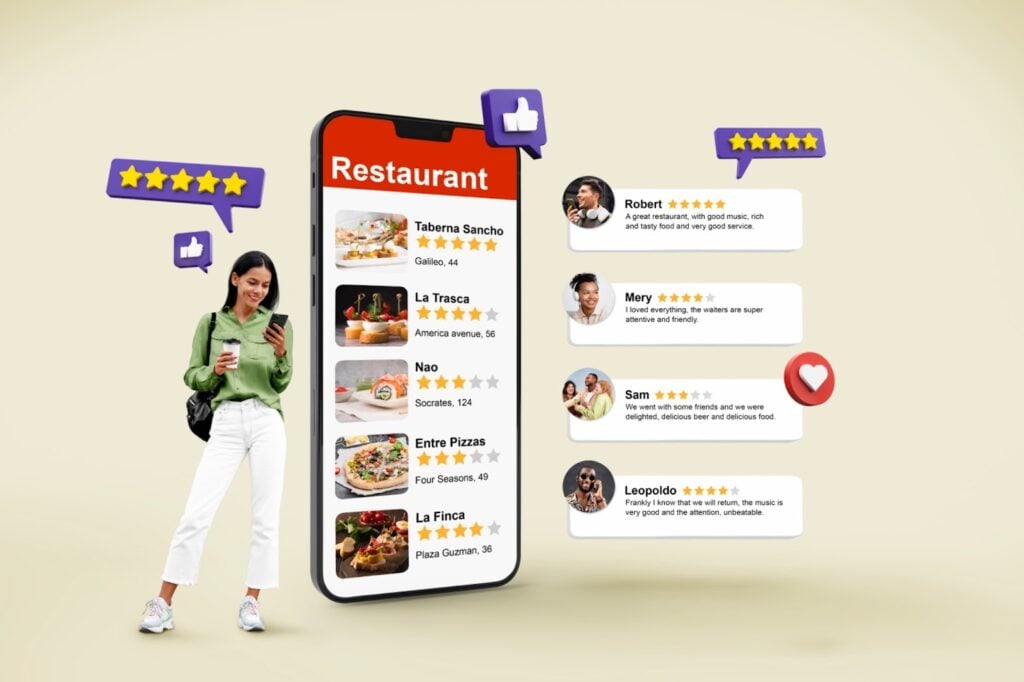
User reviews also contribute to a brand’s entity authority and can influence AI citations.
That means strong review profiles are crucial for all brands seeking AI search visibility, and not just local businesses.
LLMs link consistent praise to your brand’s identity through a process called ‘named entity recognition’ (NER).
NER is how AI systems can identify and understand ‘entities’ like people, organizations, places, and products.
Here’s a simple breakdown of how it works.
LLMs construct knowledge graphs that connect entity relationships, such as two businesses operating in the same industry. They also connect entities to entries in existing knowledge databases like Wikidata and Crunchbase.
Your brand’s entity profile consists of all the facts LLMs have about you, such as:
- Your brand name
- Your geographic location
- Your core products and services
- Key personnel at your organization (CEO, CMO, etc.)
- Your perceived topical authority on particular subjects
- Your review profile
This means your entity’s review layer directly impacts your citation chances alongside name, location, and authority signals.
The impact of your reviews on your brand’s ‘narrative’
Consistent, repeated signals about your brand can converge into a narrative. In fact, it only takes around 250 documents that parrot the same information for a concrete narrative to form in an LLM’s ‘mind.’
Once a narrative forms, it becomes self-reinforcing and difficult to undo.
Therefore, if you have lots of detailed positive reviews, a narrative can form about your brand’s strong credibility, which is ideal.
Conversely, lots of one-note, shallow reviews can form manipulation narratives that are difficult for LLMs to unsee.
This reinforces the importance of fostering a natural, mostly positive review profile that contains in-depth recommendations from real customers.
How to Optimize Your Review Profile for AI Visibility

If you want your review profile to help you earn more AI citations, you need to focus on strategic depth over raw quantity.
We do not recommend trying to fake any reviews, nor should you try using services to generate reviews from bots.
Remember, LLMs pay attention to reviewer contexts, and they assign more weight to older profiles that have extensive histories, which isn’t easy to fake.
The good news is that there are ways to influence your audience to provide the type of in-depth reviews that LLMs value.
Core optimization tactics include:
-
Using specific feedback prompts
Move beyond the standard ‘how was your experience’ prompts and use targeted questions instead. Whether you’re using email or review cards, ask questions that elicit review depth.
Some examples include, “Can you describe the flavor profile or texture that made our coffee memorable?”
“What stood out about wait times or staff knowledge?”
“What keeps you coming back? The coffee, ambience, or service?”
These types of questions are excellent for sparking detailed reviews that wouldn’t have emerged from generic phrases.
-
Responding to reviews strategically
Every direct reply to a review from your business adds a layer of trust. Therefore, how you respond to your reviews matters as much as the reviews themselves.
Don’t just respond to negative reviews, either. Instead, aim to respond to every review that you get to ensure customer satisfaction and build trust with LLMs.
-
Align content language with positive reviews
Take notes on any specific positive phrases that keep popping up, such as ‘lightning fast service.’ For maximum impact, include these phrases in your content and service pages.
-
Maintain review profile hygiene
Review frequency and freshness both matter, so you need to maintain your review profiles. LLMs check your reviews across multiple platforms, so you’ll have to keep track of them all to own the narrative for your brand.
Check these boxes, and you’ll have a richly detailed review profile that signals trust to LLMs and your target audience.
| Need help managing your online reviews and reputation? Sign up for our Review and Reputation Management service to put your review profile on autopilot (and maintain strong trust with LLMs and audiences). |
Final Thoughts: The Importance of Reviews in AI Search
Reviews play a much larger role in AI search than they did in classic organic search.
They’re now crucial for earning AI citations and controlling the narrative surrounding your brand’s entity profile.
Whether you’re a local business or operate strictly online, stringent review management is now a necessity for all.
Do you need hands-free SEO and review management?
Check out HOTH X, our fully managed service for better organic and AI search visibility!
Leave a comment