

Want better visibility on AI search platforms?
If the answer is yes, you’ll need to earn real-world trust instead of building a large volume of backlinks.
That’s because LLMs (large language models) have completely changed the way online authority works.
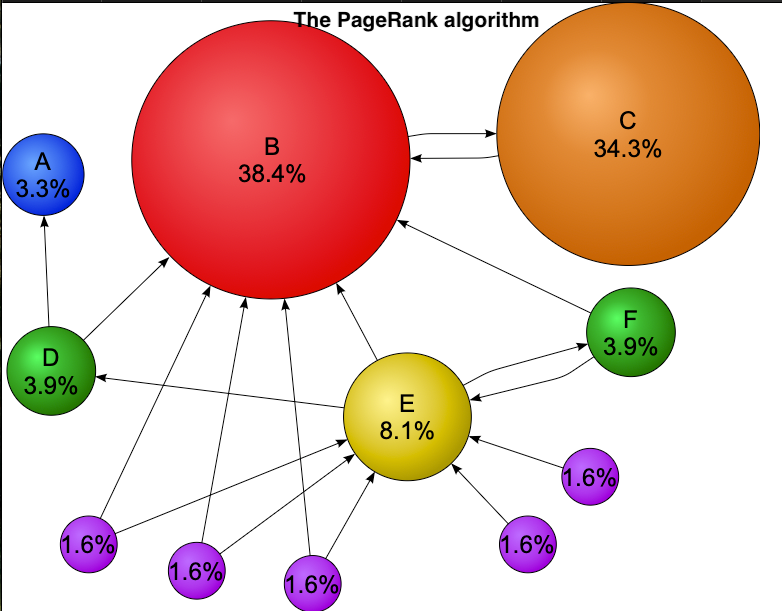
For roughly a decade and a half, Google’s PageRank was the dominant authority measuring system. It works by assigning authority signals to hyperlinks, effectively using the link graph as a credibility scoring system.
In PageRank, link quality AND quantity both contribute to authority, so targeting link volume was a viable tactic, as long as the links weren’t abysmal in quality.
The transition to LLM-powered search tools, like Google’s AI Overviews and ChatGPT, has made PageRank obsolete in most cases. Users are almost entirely focused on AI-powered search features nowadays, and traffic generation from organic search results continues to decrease.
Earning visibility on AI search platforms is the new path forward, which means appealing to LLMs’ concept of authority instead of classic search algorithms.
The result?
Link-building has transformed into trust-building.
Backlinks still matter, but real-world trust beats out web-level manipulation. Also, thanks to the advanced language processing of AI search tools, brand mentions that don’t contain backlinks can still contribute to your authority.
In this guide, we’ll teach you how to pivot your link-building strategy into a trust-building strategy, so keep reading!
Link-Building in the Old Model
The concept of links as credibility votes began with PageRank, and it played a major role in Google becoming the #1 search engine in the late 90s and early 2000s:
Before Google burst onto the scene, early search engines like Yahoo only used on-page ranking factors like keyword matching and keyword frequency. As a result, it was extremely easy to manipulate search results pages.
All a brand had to do was stuff a ton of exact-match keywords into their content, and they were able to achieve top rankings.
Google’s PageRank was a significant breakthrough at the time because it finally provided a way for search engines to measure a website’s credibility alongside its keyword relevance.
The system measured the quality and quantity of backlinks pointing at a domain to determine its level of trustworthiness. If a website had backlinks coming from trusted sources, like major news sites or government agencies, it would rank better than a site that had A) no backlinks or B) low-quality backlinks.
The difference was immediately noticeable to users. Suddenly, it was like Google was reading their mind whenever they searched for something online.
How link-building’s role has changed
However, as time went on, the PageRank system also became easy to manipulate, especially by building large volumes of medium-quality backlinks.
This caused Google to continuously update its algorithm and make it more sophisticated. In 2013, the Hummingbird Update introduced the concept of semantic search to Google, which meant its algorithm could finally start to understand the meaning behind words.
RankBrain introduced AI and machine learning to Google in 2015, which added even more language processing capabilities. This meant manipulative techniques became less and less effective, even before the AI chatbot revolution of late 2022.
Once LLMs hit the scene, Google followed suit with the release of its internal LLM, Gemini, and AI Overviews.
LLMs are like RankBrain on steroids.
Where RankBrain provided some basic contextual reasoning for Google’s algorithm, LLMs are able to fully comprehend language and respond to users just like a human would.
Since they can fully comprehend text on a page, the quality of links and citations became the ultimate measure of authority.
Building large quantities of backlinks no longer works because LLMs don’t care about metrics like Domain Authority (DA) and Domain Rating (DR).
Instead, contextual relevance, trust, and quality are what matter for improving online visibility.
| Link-Building Impact | Traditional Search | AI-Powered Search |
| High-quality, editorial backlinks | ✅ | ✅ |
| Helpful resource backlinks | ✅ | ✅ |
| High-volume backlinks | ✅ | ❌ |
| Slightly irrelevant backlinks on high-DA sites | ✅ | ❌ |
Why Trust Matters More Than Link Volume Now
PageRank is a mathematical system that quite literally ‘counts’ links. LLMs have effectively removed math from the equation since they’re able to contextualize trust.
While mathematics are undeniably still involved (since all deep learning is mathematical), LLMs have shifted the authority measuring process from pure math to pure language.
Because of entity understanding and contextual modeling, AI search tools can fully understand why one site links to another. To do so, LLMs examine:
- The tone and context of the mention. LLMs know the difference between endorsement and criticism, so your brand mentions should be positive in nature. Ideally, you want other websites to recommend your products, cite your content as authoritative resources, and link to things like your original research.
- The credibility of the source domain. Mentions and backlinks exhibit the most trust when they appear on credible domains. LLMs will check the source domain’s mentions, citations, and backlinks to ensure its trustworthiness. When targeting websites for brand mentions, don’t forget to audit their web presence first. If they’re already getting lots of AI citations, it’s a surefire sign that they’ve built the type of credibility necessary to appeal to LLMs.
- The topical alignment between the two entities. Relevance is a major factor for LLMs, so they want to ensure that your brand is topically aligned with the domains you’re mentioned on. As such, only topically aligned brand mentions will improve your perceived authority. Earning brand mentions on unrelated sites won’t do anything for your AI visibility, so stick with niche-relevant and niche-adjacent sites.
The result?
It’s now practically impossible to fake authority by accruing large numbers of low-quality backlinks. Also, random or irrelevant brand mentions won’t count towards your authority, even if they’re from high-DA sites.
Remember, ‘raw’ authority scores like DA and DR are based on the PageRank system that counts links, so they’re obsolete for measuring AI search visibility.
LLMs’ advanced language processing is also the reason why unlinked brand mentions can improve your authority (assuming they’re positive, relevant, and appear on trusted domains).
So, if your brand frequently appears alongside other authoritative entities in your field, LLMs will pick up on this and start associating you with that industry, even without the presence of backlinks.
The Top Trust Signals That Influence AI
Next, let’s learn which trust signals influence LLMs the most. At this point, there has been comprehensive research conducted about AI visibility signals.
Here’s a breakdown of the most important insights:
- Ahrefs found that the top three visibility factors influencing AI are branded web mentions, branded anchor text, and branded search volume. This reinforces the belief that building an online buzz around your brand improves AI search visibility.
- More recent research (October 2025) by WebFX and Exposure Ninja has confirmed Ahrefs’ findings, noting that authoritative brand mentions outperform other trust signals. It’s further proof that a brand’s online sentiment plays an extremely important role in how LLMs choose sources to cite.
- An in-depth analysis of AI search results by Simple SEO Group also confirms that mention frequency is the strongest trust signal, with close seconds being review sentiment and data recency. Also, they discovered that AI models view brands with consistent narratives across multiple platforms as ‘safe’ and ‘trust-certified.’
These insights make it clear that brand mentions are the new backlinks for AI search optimization. Rather than trying to build authority through volume, you should focus on establishing trust.
Here’s a closer look at the top trust signals that LLMs value.
Verified citations
First, let’s distinguish the difference between verified citations and media mentions. In an AI SEO context, a verified citation is a machine-recognizable reference to your brand on another website.
By machine-recognizable, we mean the reference is:
- A backlink to a product, service, or piece of content
- Schema-linked and labeled to remove ambiguity
- Another type of structured attribution that connects your brand to verified knowledge bases (like Wikidata, Crunchbase, and Google’s Knowledge Graph)
That’s why they’re called verified citations, because an LLM (or algorithm) is able to confirm your brand’s credibility through reliable sources.
For these citations to count toward your authority, though, they must be relevant and come from topically aligned domains, as we discussed previously.
Therefore, your best bet is to target credible blogs and media outlets within your industry.
How do you know which websites in your niche LLMs trust?
It’s easy!
Do a couple of searches related to your niche on tools like ChatGPT and Perplexity, then note which domains they cite the most often. These are the sources in your niche that LLMs already view as authoritative.
Targeting these websites ensures you only earn mentions and backlinks from domains that will genuinely boost your perceived authority.
Media mentions

As research shows, branded media mentions are the cream of the crop for improving AI visibility. These occur whenever a journalist, blogger, or influencer mentions your brand in a news article, social media post, or podcast.
Obviously, mentions from major media outlets (think Forbes, CNBC, and The New York Times) are the most impactful.
These types of legacy media sites have rock-solid reputations, so earning mentions on them will always work out in your favor.
Niche-relevant news sites and media outlets are also fair game, so don’t forget to also target them in your campaigns.
| Need help earning valuable media mentions and backlinks? Check out our Digital PR service to have our expert team handle it for you! |
Positive brand sentiment

LLMs also want to know that customers trust your brand’s products and services. That’s why they will check your reviews on multiple platforms, AND monitor brand sentiment on forums like Reddit.
You can have outstanding content and top-tier brand mentions, but if all your reviews are abysmal, you likely won’t receive many AI citations. In that sense, public sentiment is now a ranking factor, so you need to pay close attention to your brand’s reviews and online reputation.
Also, you should know that negative reviews are inevitable, even for the most respected brands. The best thing you can do is respond to negative reviews and do your best to resolve the issue. The worst thing you can do is remove all forms of criticism, as that’s a red flag for your users.
| Don’t have time to respond to reviews? Our Review and Reputation Management service has you covered! |
Final Thoughts: How The HOTH Builds Trust
Ultimately, real-world trust has made raw link-based authority completely obsolete. LLMs don’t count links or consider link graph signals, so you need to adjust your link-building strategy accordingly.
Backlinks are still strong trust signals, but they must take the form of verified citations and media mentions to impact your AI visibility.
How are we building trust for our clients so they can get cited by AI tools?
In all honesty, we’ve already been building the kind of trust LLMs value for our clients, even before the advent of AI Overviews.
Since Google’s search algorithm had become so complex (with RankBrain, BERT, and MUM on board), we’ve long focused on editorial quality and trust above things like link volume.
That’s how we were able to achieve rapid improvements in AI visibility for our clients just by engaging in our existing tactics.
In fact, we were so inspired by the results we were achieving for clients that we launched AI Discover, a new offering that compiles all our most effective AI SEO tactics (digital PR, link outreach, earned media, and reputation management).
Don’t wait to try out AI Discover today to earn the type of trust you need to get cited by AI search tools!
Leave a comment