

Good afternoon my fellow HOTHkateers, today we have another treat for you to keep you updated on the wonderful carnival that is Google, specifically what’s happening with Google’s local search results.
We’ll be breaking down the latest changes as well as some thoughts into where Google is going in the future – And what you should do to keep up!
Let’s get into it:
The Google 3-Pack (Snack Pack) Local Update
Google has recently updated their results to get rid of what used to be the very common local 7-pack and replace it with a new 3 pack results.
It looks like this:
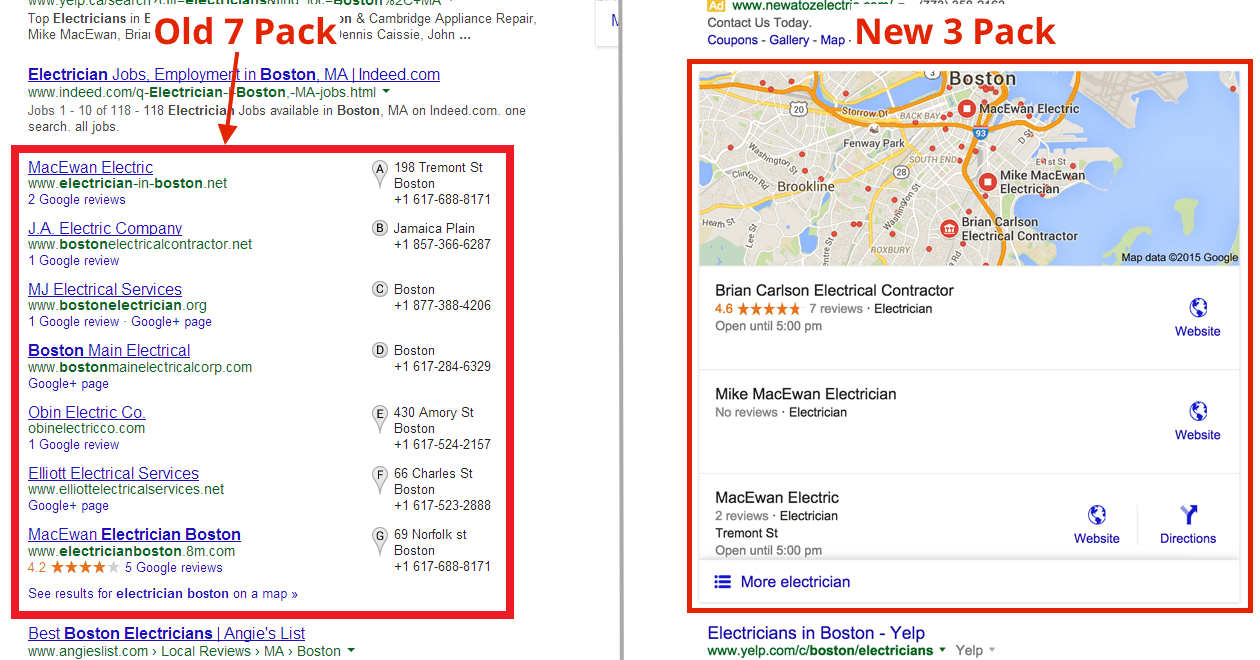
Essentially, it cuts off anyone that was below the top 3 in the local pack.
On top of that, you’ll notice some other key differences:
- Phone number and address are removed (Wut?)
- Google+ links are removed (Google is de-associating Google+)
- When you click the name, instead of going to the end website, like you used to, it takes you to what looks like a Google Maps page
Why did Google do this?
We can’t say for sure, but taking a look at what else is going on in Google land we might make some assumptions.
1. Google Wants The Local Services Market
If you’ve been keeping up with the news lately, it’s obvious that Google wants in on the local services market. First, Google invests $100 million into Thumbtack, then they hire the team of now defunct Homejoy to build out their own platform.
Other big players like Amazon are getting in the game, who recently launched Amazon Home Services… and ya know that Google just can’t let Amazon win.
2. Google wants more money by controlling the process
Gotta keep those investors happy right? Adwords isn’t enough, so Google needs to control all the leads.
Well yeah, Google makes money by keeping users in the search results clicking their ads. The more they can do that, the more money they can make.
Check out this case study by Casey Meraz at Juris Digital where shows where users are clicking.
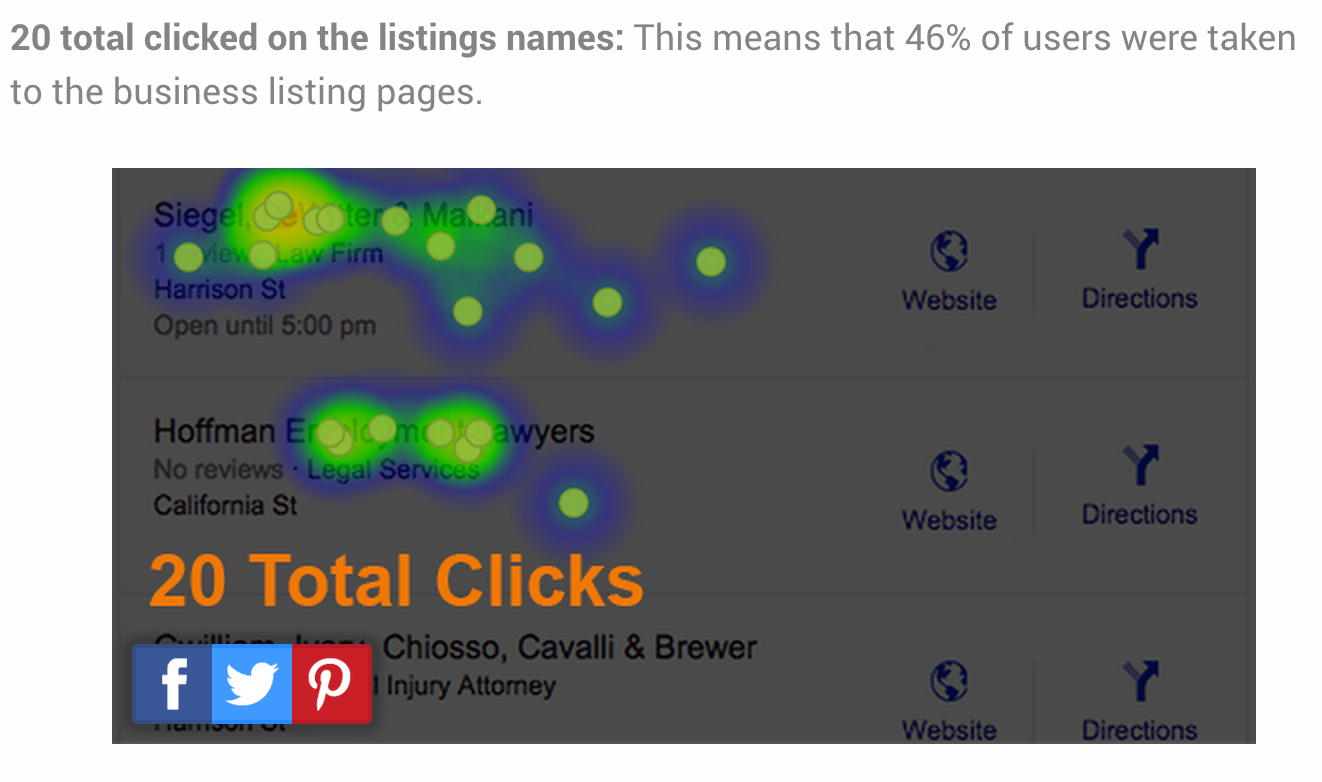
He concluded that 46% of people are clicking on the local results’ businesses name…
Here’s the kicker: One of the biggest differences between the old results and the new is that users used to click the name of the company and go directly to the homepage, therefore sending users away from Google.
Now in contrast, clicking the name takes the user to ANOTHER Google page.
The more page views, the less users need to visit the end site. Google can also make more money by controlling the whole process.
[Edit] While Casey concluded that most users are clicking on the local result’s business name, another 3 pack case study by Mike Ramsey at Nifty Marketing concluded that the organic listings right below the 3 pack are generating the most clicks.
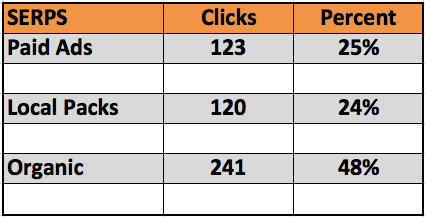
His conclusion? Time to focus on organic listings more than ever.
Click studies will vary from serp to serp, and with limited data it’s hard to tell, but still interesting to see some real data behind these claims.
3. Google is just making leeway for more ad types.
Google recently has been testing the home services ad types, they look like this:
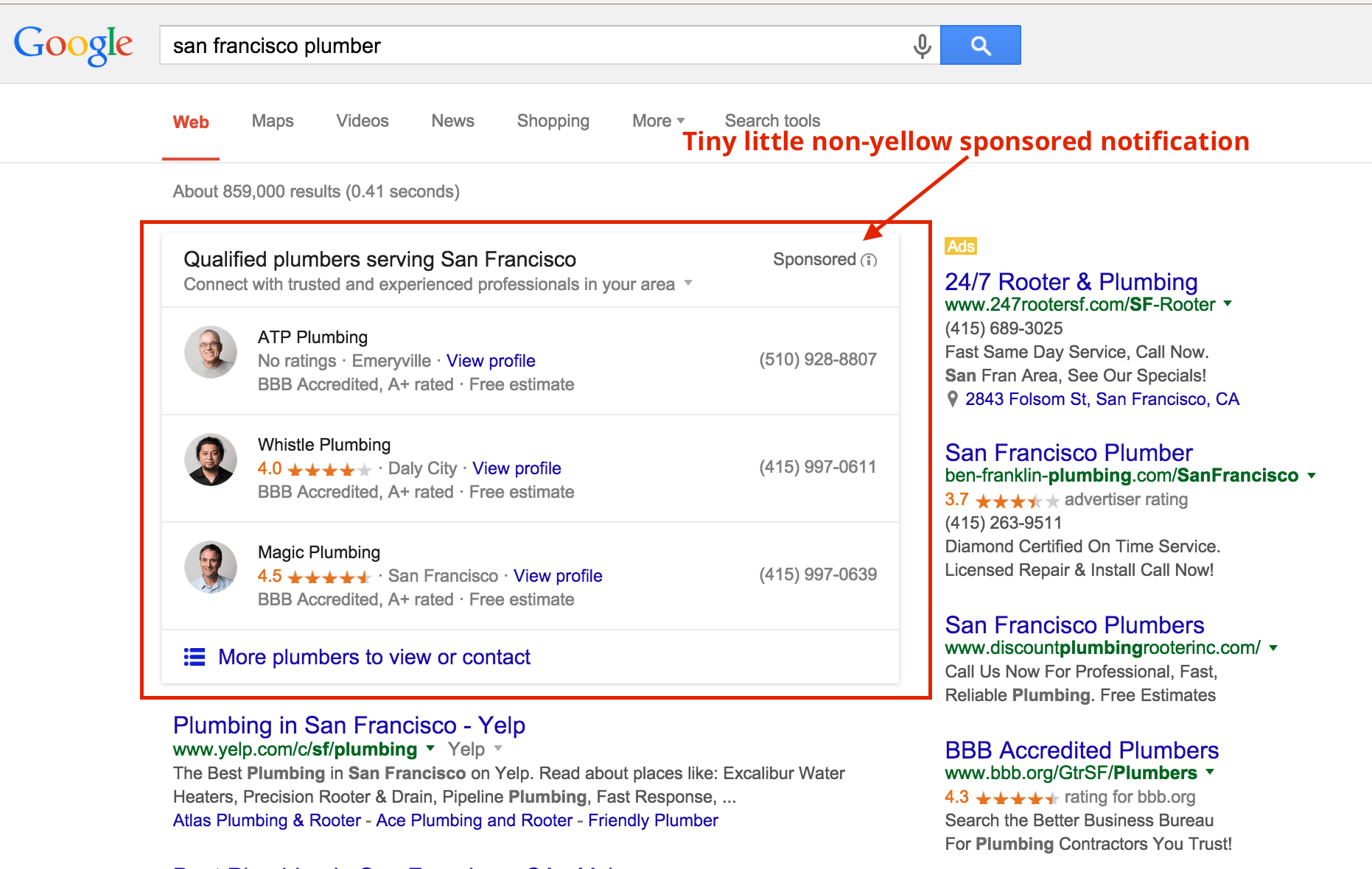
Awful similar to the local 3 pack huh?
We don’t know what the future holds for these types of ads, but the traditional yellow signaling that Google had with adwords is getting replaced with just a small little grey circle that tells people they are ads.
The perfect combo – pay to play that looks like organic results. Can you hear the dollars ringing now?
Hypocrisy
What’s funniest about this is the hypocrisy of Google.
Google hates scraping – taking information from other pages and publishing it on your page, and even bans websites that do this.
They regularly block IPs that scrape Google (resulting in lots of rank trackers shutting down) around that time.
Even Google content guidelines say you need to stay clear of scraping:
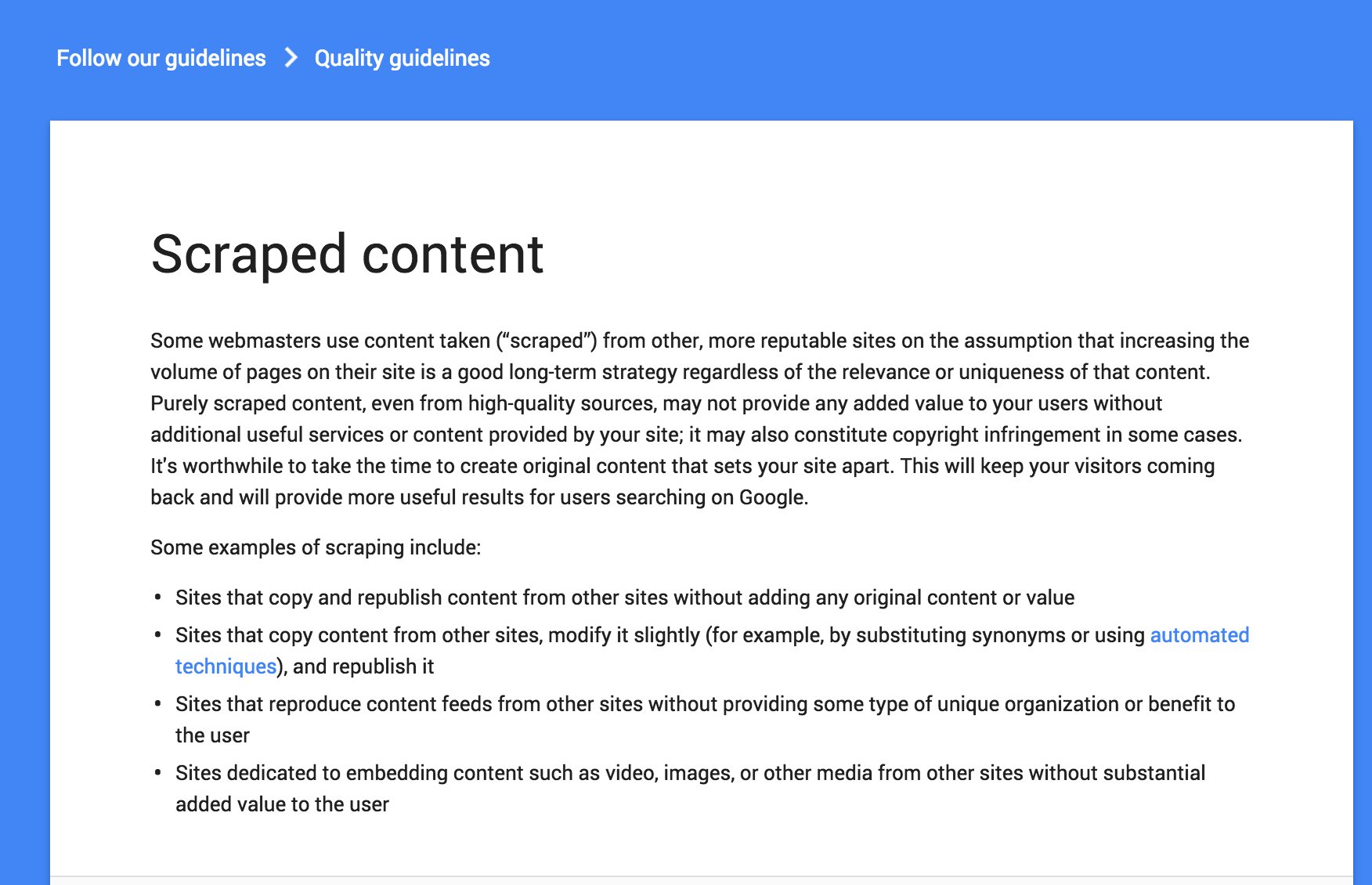
Well, at least they hate other people scraping, but for Google itself.. that’s fine.
Google is the worlds biggest scraper. Hilariously shown in this tweet:
.@mattcutts I think I have spotted one, Matt. Note the similarities in the content text: pic.twitter.com/uHux3rK57f
— dan barker (@danbarker) February 27, 2014
(*this search result has been since updated)
But why would Google be a scraper?
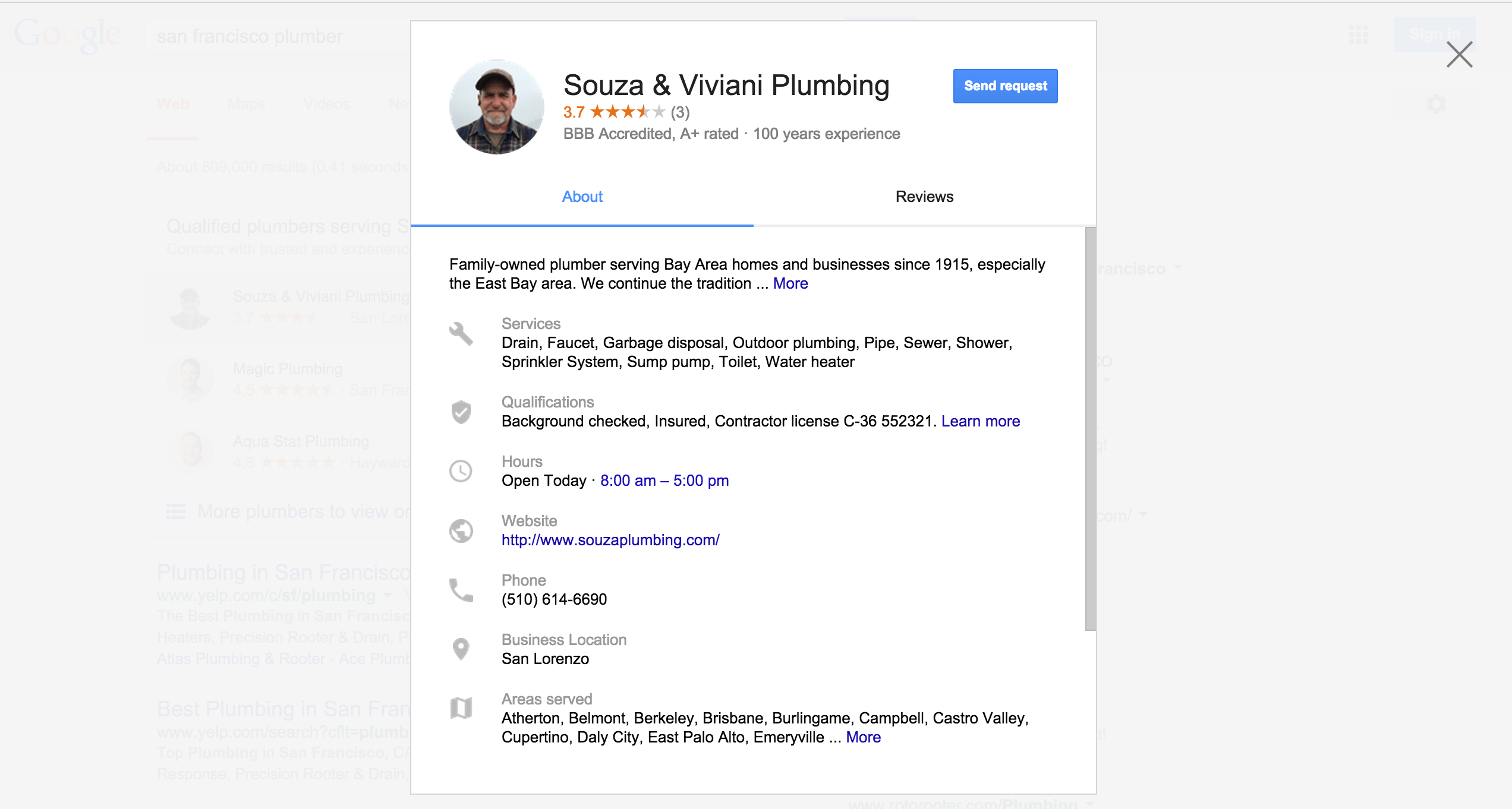
Check out these screenshots of how Google wants to handle the entire lead transaction (this exists as the new home service ad types).
If no one ever visits the end-users site, they can control everything (they control the leads, they can sell the leads).
img src=”https://www.thehoth.com/wp-content/uploads/2015/08/Screenshot-2015-08-11-11.24.04.png” alt=”Google lead capture” width=”2544″ height=”1374″ class=”size-full wp-image-3008″ />
img src=”https://www.thehoth.com/wp-content/uploads/2015/08/Screenshot-2015-08-11-11.19.51.png” alt=”Google collecting $$ for leads ” width=”2556″ height=”1376″ class=”size-full wp-image-3010″ />
I don’t think google actually wants you to go to the business’ website. If they can get all the business’ content into the search results, they can be the middle man for everything.
They can keep users on the search results, sell the leads to the advertisers right from the easy-google-contact form…
They can control all the money, all the transactions.
Google knows this works, and they’ve been trying to include more and more data right into the search results to keep people on the page.
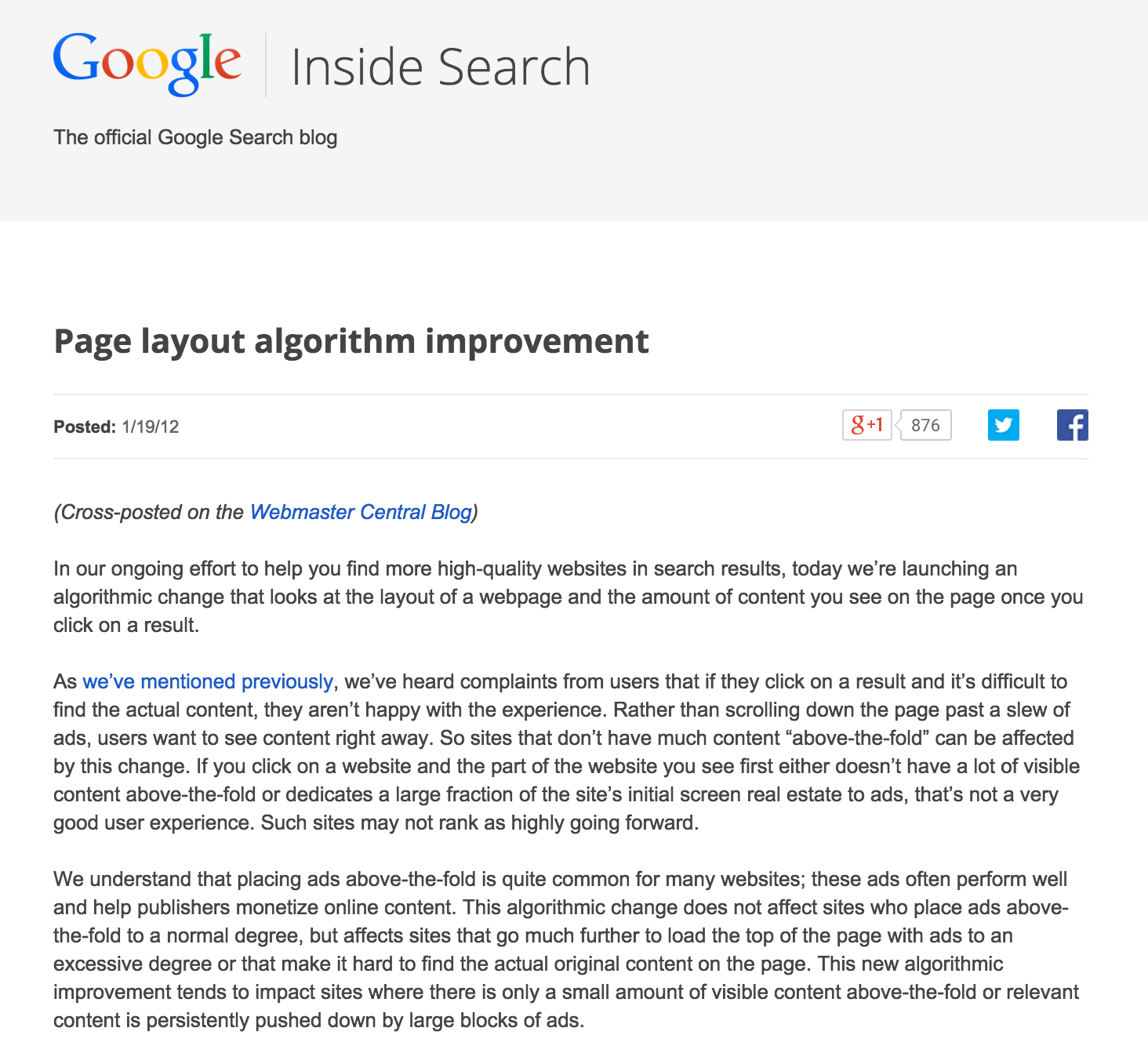
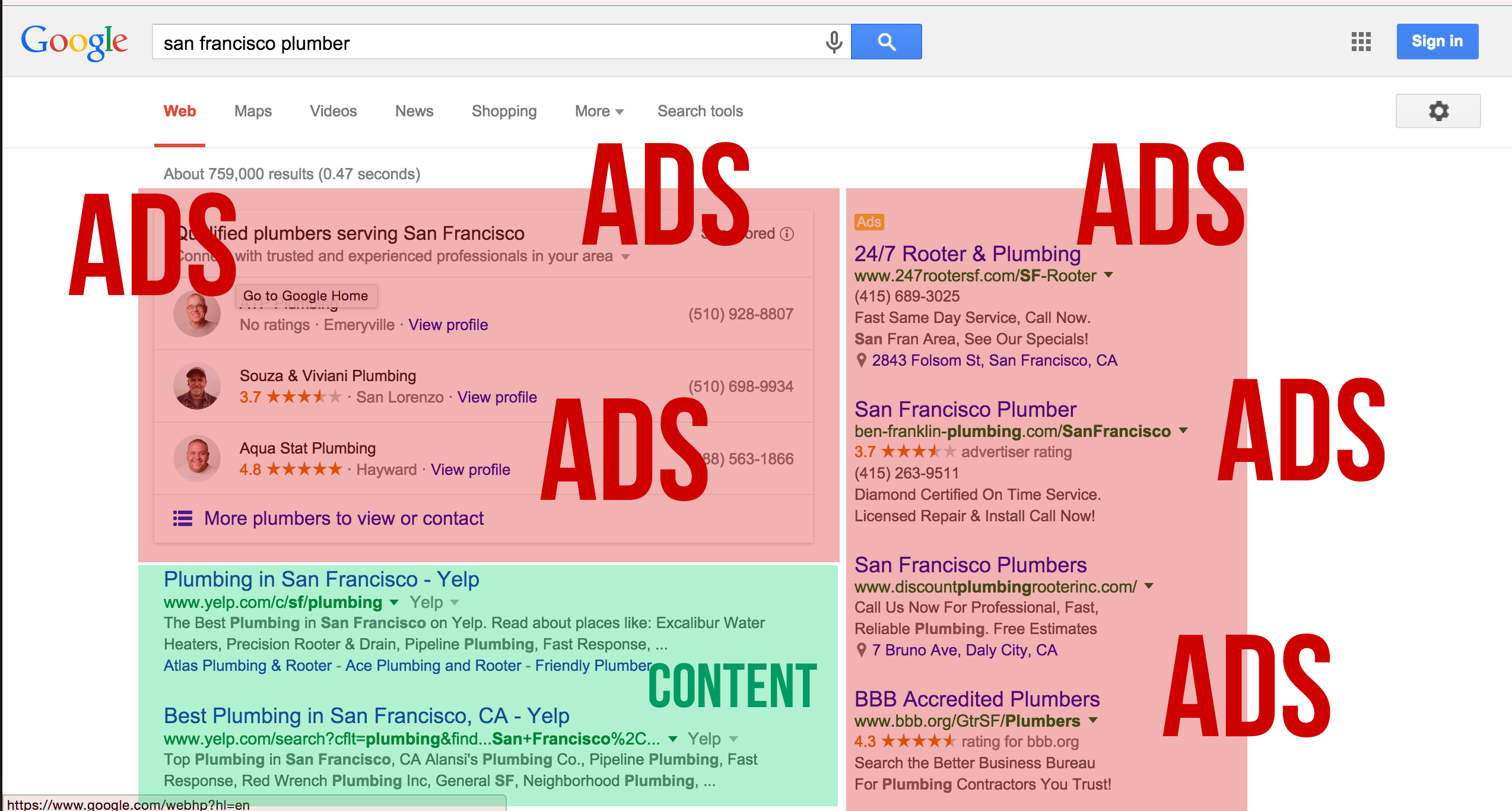
On another note, with this new ad type, Google’s results are super top heavy with ads, something they also say is not cool… for anyone except themselves. They even released a Google update that will demote pages for doing this back in 2012:
 <
<
(For more Google updates – click here)
But Google pummels 70% of the page with ads… haha. It works.

So what are we to do?
This article makes a lot of assumptions, and the only thing that we’ve historically know for sure is that local changes.
One major thing to point out is that nothing changed algorithmically with this update. There are no new ranking factors, meaning that if you ranked 1-3 before, you continued ranking 1-3, so all the local strategy that we advocate is still accurate and up to date.
With that said, at this point, if you’re not top 3 you’re going to have to step it up! (You have to rank in the top 3 locally to even be shown).
This means making sure you have good optimization on your GMB listing, good local citations, and a strong organic presence.
(If you want an in depth view of how the whole local ecosystem works, you can check out our free 20 min local seo webinar here)
And as always, we’ll continue keeping you up to date with the Google Alphabet circus.
Cheers,
The HOTH Crew
P.S. Have you signed up for a HOTH account yet? You can get access to SEMRush data for free, plus manage all your link building in one place. Click here to sign up (free).
Leave a comment