

Ever wonder how AIs are able to give such detailed answers to complicated queries?
While multiple layers are involved, such as RAG (retrieval-augmented generation), query fan-out plays a large role in the information retrieval process.
Whenever an AI like ChatGPT needs to look something up online, it doesn’t run a search for the exact user prompt, as these are usually too lengthy.
Instead, it will break the prompt down into smaller, more search engine-friendly queries.
This makes it easier to find relevant information since classic search engine algorithms deliver the best results with short-tail keywords.
An example would be searching for ‘best pizza NY’ instead of ‘What’s the best pizza in New York City?’ on Google.
With query fan-out, LLMs can combine online sources to answer complicated questions with a great deal of nuance.
Here’s the good part.
Like other generative AI processes, query fan-out is something marketers can leverage in their favor.
For instance, topic clustering can help you target the ‘sub-queries’ related to your niche, heightening your chances of getting mentioned or cited by AI platforms.
In this guide, we’ll teach you everything you need to know about query fan-out, including how to optimize for it in your content.
How Does Query Fan-Out Work?
Essentially, query fan-out is the bridge between natural language and ‘search engine speak.’
Here’s an example of the process in action.
If we enter this lengthy prompt into Perplexity:

It will deconstruct the query into a series of shorter, more distinct queries:
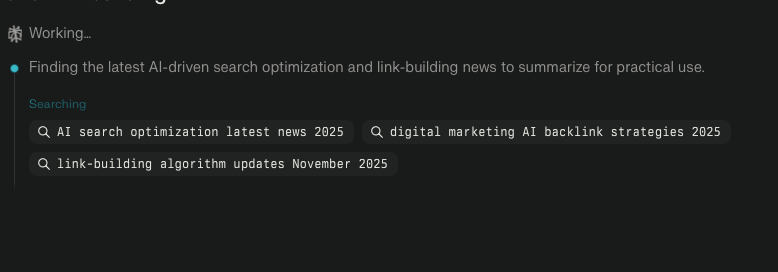
As you can see, it ran three individual searches that focus on every information request from the original prompt.
Why do generative AI platforms use query fan-out?
Let’s break this down.
Based on the prompt, the LLM can infer that the user wants to know:
- The latest news related to AI search optimization
- Some AI link-building strategies
- AI link-building updates
Here’s where query fan-out enters the picture.
LLMs understand that if they used the original prompt on a search index, it would be too complicated to capture everything the user wants to know.
That’s why they break queries down into hyper-focused snippets, because they work way better with retrieval systems.
Perplexity is also unique in that it crawls the web, maintains its own index, and doesn’t rely on any third-party indexes, like Google or Bing’s.
Yet, it still uses query fan-out.
Even in its own index, information retrieval is far more accurate with decomposed queries that only consist of a few words.
Thus, a query like ‘AI search optimization latest news 2025’ will yield more relevant results than going with a huge ‘catch-all’ query.
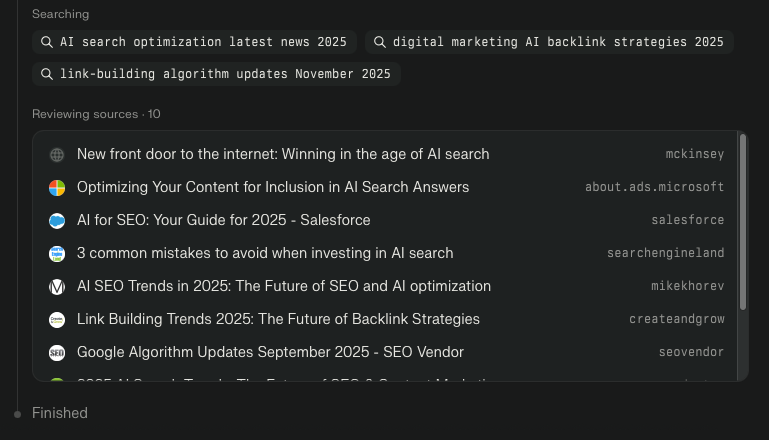
Overall, Perplexity reviewed 10 sources based on its three fanned-out query searches before generating an answer:
| Besides improving retrieval quality, there are a few other reasons why LLMs use query fan-out:To satisfy all types of search intent – Most natural language prompts are multi-faceted and contain several types of intent, like wanting to know the latest news about AI search AND link-building. Query fan-out enables LLMs to cover all the angles when formulating a response to a prompt. To answer unique queries that have never been answered before – Conversational prompts are also uncharted waters in many cases. Users are able to ask LLMs complex questions that haven’t been answered by a singular source. With query fan-out, LLMs can synthesize multiple sources to generate an entirely unique answer. |
Query Fan-Out and SEO/GSO: What Marketers Need to Know
Query fan-out impacts GSO (generative search optimization) and SEO because the brands that optimize for multi-faceted queries benefit the most.
If your website covers a topic cohesively, the chances are that you’ll appear as a source for ‘fanned-out’ queries.
This can lead to valuable brand mentions and AI citations.
Also, query fan-out presents a massive range of possible keywords your brand can get cited for if you’re a trusted source in your area of expertise.
The key to optimizing for query fan-out is mastering topic and intent coverage.
At the same time, you should move away from a keyword-centric approach to your content strategy, as this has become too narrow in scope.
Think about it; instead of optimizing for one keyword at a time, you can potentially get cited for thousands of relevant keywords if you fully flesh out a topic with lots of rich content.
The importance of structured data
Structured data and formatting also play vital roles in optimizing for query fan-out.
For example, schema markup clearly defines, in a machine-readable format, what each aspect of your content represents (like FAQ sections, reviews, author bios, etc.). This makes it easy for LLMs to parse and cite your content, which is why including it is an essential step in generative search optimization.
It also helps AI systems identify the most relevant results when conducting ‘fanned out’ queries.
Here’s a quick example.
Imagine two websites, site A and site B, both of which provide answers to the query ‘how to change a car tire.’
Site A makes proper use of the HowTo schema:
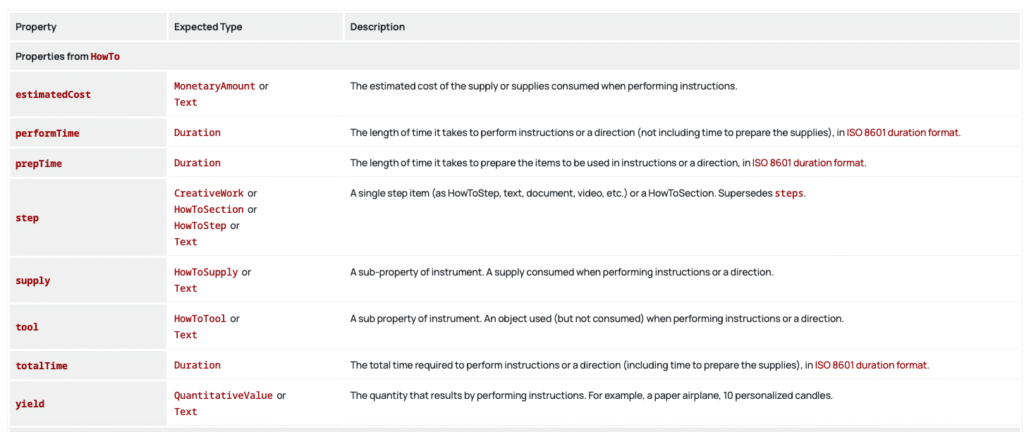
They’ve included properties like:
- step: Clearly labeled instructions for each step
- tool: A list of required tools
- totalTime: Estimated total completion time
Site B, on the other hand, has an extremely well-written guide, but they didn’t use any schema markup.
Which site do you think LLMs will cite for queries relating to changing tires?
If you guessed site A, you’re 100% correct.
Thanks to site A’s schema markup, an LLM can quickly verify details tied to user intent for prompts about changing tires, such as the necessary tools and estimated completion time.
While site B’s content is well-written and may even be more detailed than site A’s, it’s unstructured and is more difficult to parse and verify for citation.
Think about it like this: including things like semantic HTML and schema markup gives LLMs the confidence they need to cite your content.
Without explicit, machine-readable information, your content becomes more difficult to disambiguate, which may cause LLMs to miss key bits of information, so don’t forget to include structured data!
How to Capitalize on Query Fan-Out with Your Content Strategy: 3 Steps
Let’s explore some of the most effective ways to optimize your content for query fan-out.
Remember, the idea is to cohesively flesh out topics while satisfying all types of search intent, and not to dedicate entire pieces of content to individual keywords.
Focusing on topic clarity and search intent will open up a wide semantic range of relevant keywords you can get cited for on AI tools.
Here’s how to do just that.
Step #1: Identify core topic clusters
First, you need to identify the topics that are most important to your business. The best way is to identify trending topics directly related to your products and services.
Here are some of the best tools for uncovering relevant topics:
- SEO tools like Semrush and Ahrefs have traditional keyword explorers and AI visibility tools, both of which are great for finding topics, subtopics, and related questions.
- Social listening tools like Hootsuite and Brand21 will help you keep an eye on what your audience is talking about online.
- Trend discovery platforms like Exploding Topics and Google Trends can help you identify which topics and queries are taking off (like this example for vehicle maintenance):
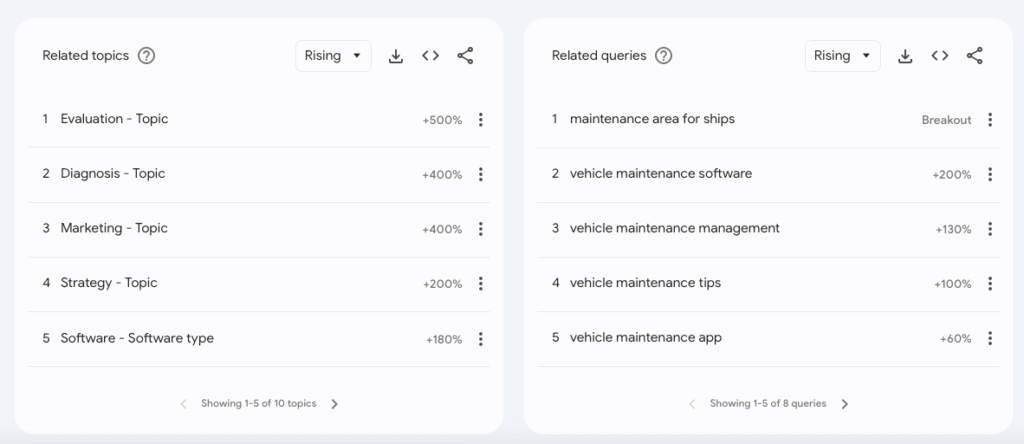
Once you’ve discovered the right topics, form them into clusters consisting of a pillar page (main topic) and cluster pages (subtopics).
Select topics that cover all types of search intent (informative, navigational, commercial, and transactional).
Here’s an example of an informative topic cluster about auto maintenance:
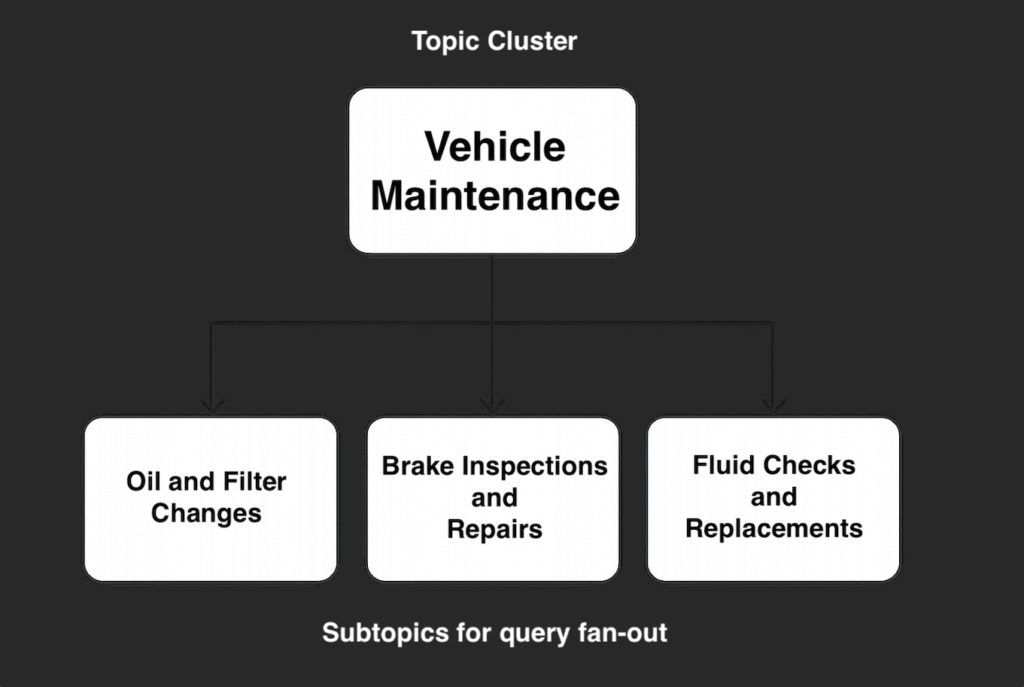
Step #2: Separate content ideas by search intent
Next, you should separate your content clusters and content ideas by their search intent.
It’s crucial to create content for all types of intent, not just informative.
For example, here’s an altered version of the same content cluster but with commercial content ideas instead of just informative ones:
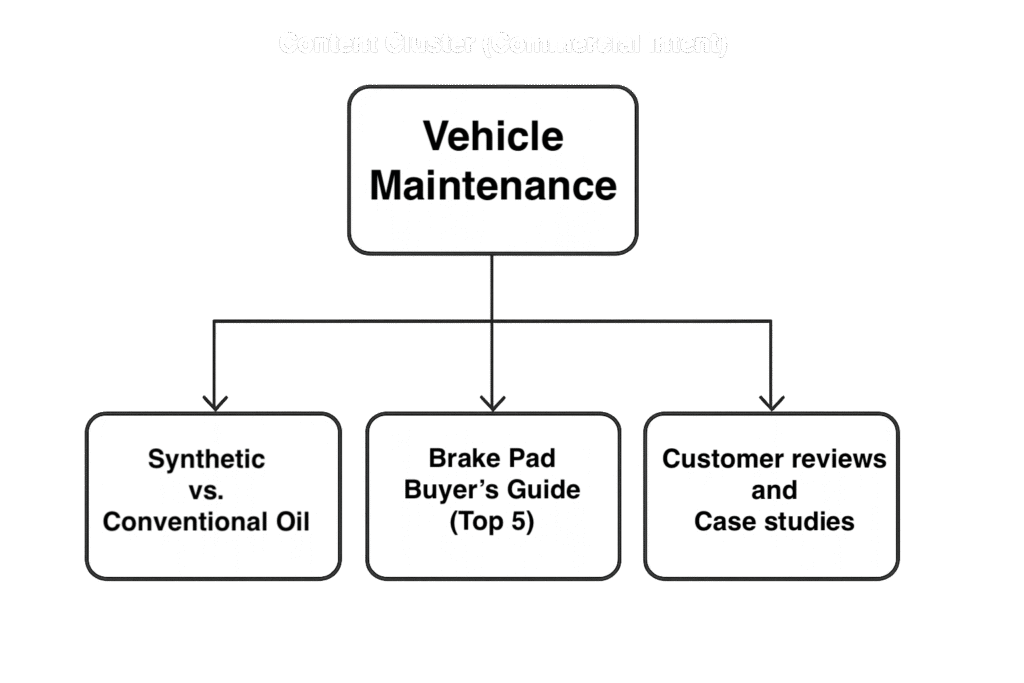
Here are some popular content formats for each type of search intent:
- Informative intent – Clusters (like the ones pictured above), Q&A pages, FAQs
- Navigational intent – About pages, local service pages, community news
- Commercial intent – Commercial clusters, price comparisons, buyer’s guides, reviews
- Transactional intent – booking pages, pricing pages, product pages
Step #3: Use clear, question-based subheadings and structured data
Lastly, you need to nail the formatting to get the most bang for your content’s buck on generative AI platforms.
Besides using semantic HTML and schema markup as we’ve discussed, you also need to adopt an LLM-friendly layout for your content.
Here are some guidelines:
- Only use one H1 tag and a series of question-based H2 and H3 tags (like What is Synthetic Oil?). Try to use your article headings to target valuable sub-intents.
- Use short paragraphs and bulleted lists (if they’re extra important bulleted items, use the ItemList schema type).
- Always use semantic HTML instead of non-semantic HTML.
- Markup your content with schema.
- Include Q&A and FAQ sections to capitalize on related questions.
Final Thoughts: Optimizing Content for Query Fan-Out
To wrap up, query fan-out is an integral part of how LLMs retrieve information online and synthesize unique answers.
It also presents a unique opportunity for search marketers to vastly expand the number of queries they can get cited for by AI tools.
Do you want to start leveraging query fan-out with your content?
Don’t wait to sign up for HOTH X, our fully managed service, and AI Discover to improve your visibility on generative AI platforms!
Leave a comment