

Here’s something all search marketers need to know.
Keyword coverage by itself no longer cuts the mustard for building sustainable online visibility.
Instead, entity-based SEO is now table stakes.
Why is that?
It’s because AI search systems understand topics through entities, not keywords.
Therefore, if your brand isn’t connected to the right concepts, organizations, and ideas, AI systems may not have a concrete grasp of who you are and what you do.
This can happen even if you have outstanding keyword coverage.
Without entity reinforcement, you can own dozens of keywords and still look like a scattered set of pages instead of a clearly defined authority figure on a topic.
Think about it like this: keywords are isolated dots, while entities are cohesive networks.
In this guide, we’ll break down why entity coverage is a necessity now, including practical ways to optimize for it.
How Entity Coverage Differs From Keywords

There’s a mindset shift that needs to take place in the search marketing world.
What used to be, “I rank for these keywords,” must become, “My brand is understood as a trusted entity in our area of expertise by AI search systems.”
The latter actually unlocks a more powerful position.
Once the LLMs that power tools like ChatGPT, Google’s AI Overviews, or Perplexity view you as an authoritative entity, you’ll start earning citations for keywords related to your business that you didn’t target outright.
We call this semantic range, and it scales way better than targeting individual keywords.
Don’t get us wrong, keywords are still important for search optimization, so don’t ditch your research methods.
In fact, modern AI models still use lexical keyword matching, but it’s a supplementary signal instead of a primary one. Keywords are primarily used as a foundation that grounds the results the AI system retrieves in relevant language.
That said, here are the main differences between keywords and entity coverage:
| Aspect | Keywords | Entities |
| Core Focus | Surface-level terms and variants (LSI, long-tail keywords, question-based keywords) | Stable concepts with attributes (products, brand, audiences) and relationships (to categories, competitors, use cases, etc.) |
| AI Perception | Disconnected mentions. Each page and term stands alone, which is why topical authority can fragment with just keywords. | Unified networks. AI systems connect all signals to one recognizable, verifiable ‘thing.’ |
| Measurement | Rank trackers, search volume, density scores | Knowledge panels, AI citations, AI Overview presence, semantic range rankings |
| Strength | Easy to map and optimize linearly. Used for grounding AI search results in relevant user language. | Compounding wins. Earns citations for untargeted related words once established. |
| Weakness | Leads to high organic rankings but can cause fragmented topical authority and gaps in AI visibility. | Requires intentional and consistent mapping across content, links, and data. Content is prone to semantic drift and decay if not frequently updated. |
| Real-World Gap | Can rank #1 for a keyword like ‘AI SEO tools’ but be completely invisible for ‘best AI SEO platforms’ (despite that both keywords mean the same thing). | Often cited as a niche authority for adjacent queries, so there aren’t huge gaps in visibility. |
What are the Building Blocks of Entity Coverage? An Optimization Strategy

Establishing entity coverage requires a cohesive, ongoing effort, which is in stark contrast to one-off keyword sprints.
Where keywords can be ‘set it and forget it,’ entities are living networks that can decay without ongoing maintenance.
Without proper content and brand stewardship, entity coverage can diminish because:
- Competitors earn stronger signals
- Algorithms update
- New subtopics emerge
- There are new statistics, facts, and lingo (which causes semantic drift)
Remember, AI systems ‘see’ in ideas, not keywords. As a result, your coverage of topics must contain the latest facts, statistics, and terminology to remain citable.
As an example, Google’s first experiments with AI search went under the label SGE (Search Generative Experience). As time went on, they dropped the SGE label and went with AI Overviews as the official term for their version of AI-driven search.
Content-wise, guides that contain the term SGE instead of AI Overviews are considered outdated now and likely won’t get cited for queries related to Google’s AI-powered search system.
The reason why has to do with the way vector search works, which ties into entity recognition.
Without getting too technical, guides that contain the term SGE sit in an older semantic neighborhood since ‘AI Overviews’ is now the dominant label in the ecosystem.
Bearing this in mind, here are the primary building blocks for establishing strong entity coverage.
Map core entities and clusters
Healthy entity coverage necessitates an intentional design on your part.
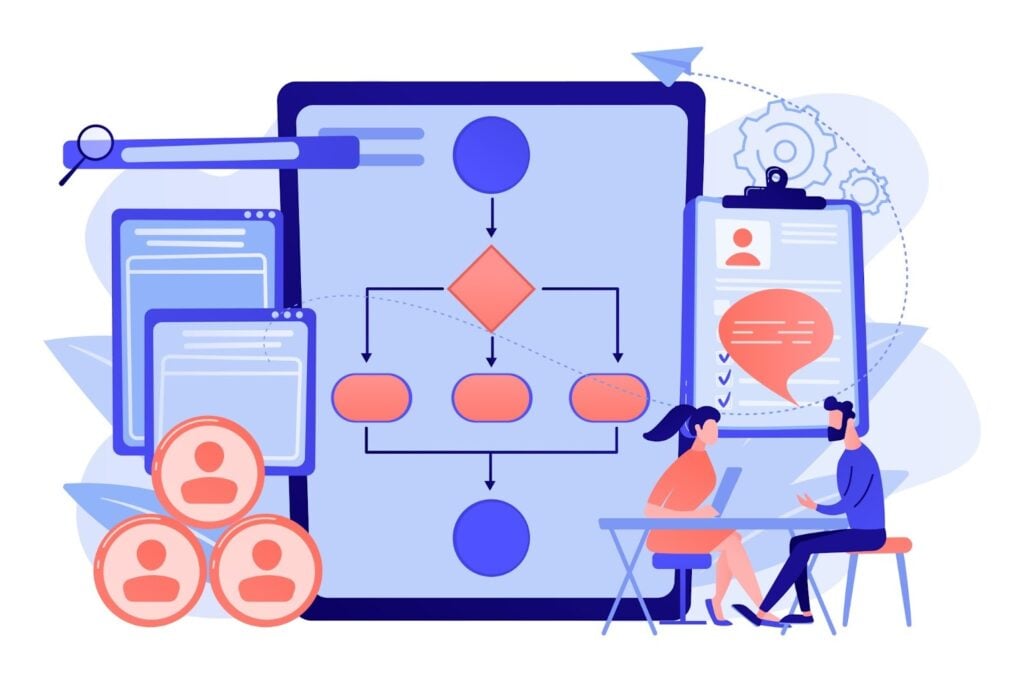
That means you need to map your core concepts and wire them into a cohesive structure that LLMs can recognize as a single, authoritative entity in your area of expertise.
In other words, you’re laying the foundation for a unified semantic footprint instead of fragmented keyword signals.
Here’s how to make that happen.
Start by defining your primary entities, attributes, and key relationships, like:
-
Brand name
Make sure you use the exact same brand name everywhere you appear online (i.e., same phrasing, spelling, etc.). Also, lay out your key attributes and relationships, like if you’re a digital marketing company with agency-scale solutions and AI-driven tools.
-
Products
Which products do you offer? What value do they provide to your audience?
-
Topics
The topics you cover should tie directly to your core offerings. Which topics directly relate to the products and services your brand offers? What type of content do you plan on producing for them?
-
Audiences
Which audiences does your brand target with your products and services? How does your content address the pain points that your offerings solve?
-
Outcomes
What are the favorable outcomes that you provide to your audience? Using our brand as an example, we provide benefits like higher organic traffic, more AI citations, and boosted credibility and authority.
You can think of these elements as nodes in your entity network.
It’s crucial to flesh out all your entity types and how they relate to one another, because this knowledge will inform your content strategy.
| Need help pinpointing entity fragmentation? Check out AI Discover, our product solely focused on improving AI search visibility. |
Prioritize topical depth over keyword lists
Now that you’ve defined your main entities, attributes, and relationships, you must tie them together with a content strategy that prioritizes topical depth.
Remember, the goal is not to research and chase after individual keywords.
Instead, the idea is to:
- Align each piece of content with the nodes in your entity network (your products, topics, audiences, and outcomes).
- Flesh out your topical universe with audience-focused content that clearly demonstrates your expertise.
In particular, you should apply specific pieces of content to each entity node.
Here’s how that might look:
-
Brand name
Fleshing out your homepage and About Page with credible information about your brand, achievements, and key differentiators.
-
Products
Create product pages that cluster around the pain points you solve and value you provide.
-
Topics
Research topical clusters for each stage of the sales funnel (top, middle, bottom), and create pillar and cluster pages.
-
Audiences and outcomes
Publish in-depth case studies and proof pages highlighting client wins (remember, they’re the hero of the story) and positive reviews.
As you can see, this strategy creates cohesion across all your pieces of content so that your signals are focused and not fragmented.
Use internal links as semantic glue

Including internal links is a crucial step that cements your entity coverage together, so it’s not skippable.
You should use inbound links to mirror the entity map that you’ve outlined thus far.
In other words, you should link:
- Cluster pages to pillar pages (and vice versa)
- Product pages to outcome pages (case studies, proof pages, etc.)
- Topic pages to product and outcome pages
- Problem pages to appropriate solutions (like a product page that solves a pain point)
Also, your anchors should reference full entities (your brand name, your product name) instead of fragmented search keywords.
Internal links are what help solidify the ‘network’ effect. AI models will follow these paths to better understand the key relationships, concepts, and attributes of your content, which amplifies your topical authority.
Implement structured data to clearly label entities

Next, your content must be machine-readable for LLMs to identify the entities in your content without any ambiguity.
To do so, you need to add structured data to your content. Semantic HTML and schema markup are the two most important types of structured data for AI systems.
Key schema types to include are Article, Product, Organization, Service, and FAQPage, with attributes like sameAs (which tells AI systems your brand is ‘the same as’ the one mentioned in other linked documents) and areaServed (for local businesses).
| Does your website need structured data? Sign up for our Technical SEO services to ensure your website is 100% machine-readable. |
Key off-site signals for entity reinforcement
So far, we’ve only covered on-page tactics for entity-based SEO, but that’s only half the equation.
Just like traditional SEO, you also need to establish credibility externally by exhibiting off-page trust signals like backlinks and third-party brand mentions.
In AI search, brand mentions still contribute to your authority even if they don’t contain a backlink.
Also, contextual relevance and editorial quality matter more than raw link metrics. AI models want to see other websites linking to your content because:
- Your expertise is respected in your field
- They view your content as original and authoritative
- Your products and services provide real value to their audiences
These types of mentions and backlinks signal trust to AI systems and reinforce your brand’s entity profile.
| Want to earn the types of mentions and backlinks that earn AI citations? Don’t wait to sign up for our Digital PR services. |
Final Thoughts: Entity Coverage Instead of Keyword Coverage
In summation, entity-based SEO is now an undeniable necessity for maintaining strong online visibility.
Without it, you’ll be practically invisible to AI search platforms, meaning all that potential traffic will go to your competitors.
With it, LLMs will view your brand as an authoritative entity worthy of citations and recommendations.
Do you need expert help making the jump from keyword coverage to entity coverage?
Check out HOTH X, our fully managed service, to fix the issue holistically.
Leave a comment